Mental Health

Stop Seeking Validation and Start Winning!

Stop Seeking Validation and Start Winning! 930 614 Artist Coaching

Let’s talk about one of the biggest roadblocks for artists: seeking validation. It’s sneaky. It creeps into your creative process without you even realizing it. One minute, you’re making music for the love of it. The next, you’re overanalyzing every track, every post, and every decision based on what other people might think.

Here’s the truth: the moment you stop creating for approval is the moment you start actually winning.

The Trap of Seeking Approval

It starts innocent enough.. Maybe you tweak your sound to fit what’s trending. You hold off on releasing tracks because “it’s not perfect yet.” You start comparing yourself to others, checking their likes, their streams, their gigs. Before you know it, you’re not even making music for you anymore.. You’re making it for a scoreboard that doesn’t actually matter.

And that? That’s where the magic dies.

The Shift That Changes Everything

Think about your favorite artists. The ones who stand out, who built a real fanbase, who seem to just get it. They’re not out here trying to fit in. They’re owning their sound, their vibe, their voice. They’re consistent. They put stuff out without overthinking. They keep moving forward without waiting for permission.

The moment you flip the switch from “Will people like this?” to “Do I love this?”, everything changes. Your confidence grows. Your creativity flows. And surprise surprise! People start actually connecting with your music because it’s real.

How to Stop Giving a F*ck and Start Thriving

✅ Make what you love – not what you think will “work.” Trends come and go. Your sound is what makes you stand out.
✅ Post the damn track – waiting for perfection = never releasing. The people who grow are the ones who put themselves out there.
✅ Detach from numbers – streams, likes, follows? They don’t define you. Engagement will come when the work is authentic.
✅ Stay consistent – momentum matters. Don’t overthink, just create and keep moving.

If you needed a sign to stop hesitating, this is it. Drop the fear. Drop the need for approval. Make what excites you, share it with confidence, and let the right people find you. 

That’s when the wins start happening!


If you are wondering how other artists deal with these kinds of struggles, the story of Lusso might be helpful to you 👇🏻
What the Avicii Documentary Taught Me About Identity and Happiness

What the Avicii Documentary Taught Me About Identity and Happiness 750 499 Artist Coaching

When I watched the Avicii documentary, it hit me harder than I expected.

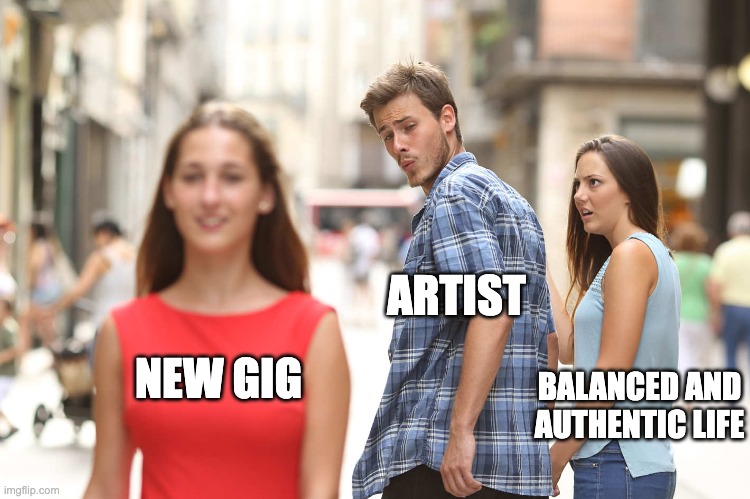
Tim Bergling’s story, his struggle to balance his public persona with his private self, is one I know all too well. As DJs and artists, we often live two lives: the one we show to the world and the one we experience when the lights go out.

Tim’s words, “I was much happier before I became famous. Everything went on autopilot – I was empty and unhappy,” brought me back to moments in my own career when I felt the same. From the outside, it looked like I had everything: the gigs, the applause, the so-called dream life. But inside, I was running on fumes, questioning whether the life I was living was truly meant for me.

If you’ve ever felt torn between the person you are and the artist the world expects you to be, this is for you.


The Artist vs The Person

Tim described it perfectly in the documentary: “As an artist, you have to see yourself as a character completely different from who you really are.”

I remember the exact moment I realized “JoeySuki” had taken over. I was backstage after a major gig, surrounded by people congratulating me, and I felt… nothing. The person standing there, smiling for photos, wasn’t me, it was the artist I thought people wanted to see.

“The characters Tim and Avicii overlapped,” Tim said, and that’s where the danger lies. When you spend so much time being the artist, it becomes harder to remember who you are without the name, the brand, or the expectations. For me, it felt like losing pieces of myself one gig at a time.


Chasing a Dream That Wasn’t Mine

Success in the music industry is addictive. The bigger the gigs, the louder the crowds, the more you want. But at some point, I found myself chasing something I didn’t even want.

Tim’s words, “I chased an idea of happiness that wasn’t mine,” resonate deeply with me. In the early years, I thought that hitting milestones, signing with a major label, traveling the world, or getting booked at bigger festivals, would make me happy. But the truth is, none of those things matter if you’re not connected to yourself.

I remember sitting at my parents’ kitchen table, exhausted after weeks of touring. My mom asked me why I didn’t seem happy, and I couldn’t answer her. On paper, I was living the dream, but in reality, I was running on autopilot, just like Tim described.


The Illusion of the Dream Life

The music industry often glorifies the lifestyle: the travel, the fans, the late nights. But the reality is far more complex.

“Friends and parents don’t understand. They say, ‘You’re living the dream,’” Tim shared in the documentary. That disconnect is something I’ve seen over and over again, not just in myself but in so many of the artists I’ve worked with. The people around you mean well, but they can’t see the exhaustion, the anxiety, or the constant push to be more, do more, and give more.


Finding My Way Back

It wasn’t easy, but I eventually realized that chasing what others expected of me wasn’t sustainable. I had to take a step back and ask myself the hard question: “Who are you outside of the music?”

Tim’s powerful reflection, “Who are you? I’m Tim,” is a reminder that being an artist doesn’t mean losing your humanity. For me, it meant reconnecting with what truly made me happy, not the big gigs or the applause, but the simple, quiet moments for myself.


Staying True to Yourself

One of the most valuable lessons I’ve learned is the importance of staying grounded. “It’s important to stay true to yourself and keep both feet on the ground,” Tim said, and that truth has guided me ever since.

Being an artist means navigating a world of noise, expectations from fans, pressure from labels, and even self-doubt. But staying true to who you are, even when it feels risky, is the only way to create a career and life that truly fulfills you.


Why This Matters

If you’re reading this and it resonates, it’s because you’ve probably felt it too. The pull between your passion for music and the weight of the industry. The fear of losing yourself while trying to build something bigger.

You’re not alone.

That’s why I do what I do. As a coach, I help artists (especially DJs) navigate these challenges. Together, we dig deep into who you are, what you want, and how to build a career that reflects both your artistry and your humanity.

If you’ve ever questioned whether the life you’re building is truly yours, or if you’re searching for balance and authenticity, I’d love to help. Let’s have a conversation.

Because at the end of the day, your career should reflect not just your talent but your truth. Let’s build something real, something that feels like you.


Take the first step. Book a free consultation today, and let’s start creating the life and career you deserve.


Want to know my full story? Download my book for FREE here.

What Successful Artists Know About Authenticity (And You Should Too)

What Successful Artists Know About Authenticity (And You Should Too) 150 150 Artist Coaching

Before diving into the topic of authenticity, let’s first define what it means in the context of being an artist.

Authenticity is the state of being genuine, true to oneself, and transparent in one’s actions, values, and expressions. It means aligning your actions with your inner beliefs without pretending to be something you’re not. In the realm of art, music, or any creative work, authenticity involves creating from a place of personal truth, free from external pressures to conform to trends, expectations, or the need for validation. It’s about staying connected to your unique voice, vision, and perspective, allowing your work to reflect your true self.

Great! Now that we’ve defined authenticity, let’s talk about it!


My Journey with Authenticity

The concept of authenticity entered my life at an early age. I started my music career in my teens, but my journey toward discovering my authentic self began years later, halfway through my twenties, after I made the decision to quit my career as an artist.

Looking back, I now realize that authenticity was the primary reason I decided to quit. I wasn’t living my authentic life, I was living someone else’s. The moment I realized that, everything changed.

I started delving deeper into myself, uncovering layers I hadn’t explored before. The more I discovered, the more curious and intrigued I became. At 25, I was just beginning to figure out who I was. That felt both crazy and exciting.

Now, in my thirties, I can reflect on that time and better understand how my decisions back then shaped the life I live today.


The Cost of Living an Inauthentic Life

As I mentioned earlier, the biggest mistake I made in my younger years was not considering my authentic self. I lived on autopilot, allowing others to dictate my direction.

Don’t get me wrong—it’s normal at that age to live like this because you’re still figuring out who you are. But sadly, many people remain stuck in this phase, living an autopilot life driven by fear.

As an artist, this lack of authenticity proved detrimental.

  • I wasn’t consistent in the genres I released because I didn’t know what I truly liked. Jumping between tech house, house, and EDM didn’t help me build a dedicated fanbase, as consistency is crucial.
  • On social media, I played a character rather than being myself. I feared judgment, worried I might look strange, sound odd, or post low-quality content.
  • The only place I felt authentic was on stage, but as an artist, that’s where you spend the least time.

As my career grew, it took over my life. I found myself trapped in a life I had inadvertently designed through poor decisions. I lived like this for over five years, but eventually, it broke me. I burned out.


Why This Matters to You

You might wonder: Why should I care about your story, Joey?

Here’s why: After ten years of coaching artists, I’ve seen many make the same mistakes I did. And you might be making them too.

Are you expressing your unique style without compromise, even in the face of trends, market demands, or societal pressures?

If your answer is yes, mazzeltov! You can stop reading here.

If not, let’s continue.


The Temptation of Trends

One of the hardest things for artists to resist is following trends. It’s tough to watch others succeed, especially when they’re newer to the scene than you. The problem? Jumping on trends often leads to inconsistency in your work, preventing you from becoming the go-to artist in your genre.

Another common pitfall is comparison. Social media amplifies this struggle, acting like gasoline on a fire.

Many artists also seek approval by making music that blends in with what’s already popular. Creating something fresh, new, and different? That’s scary but it’s also where authenticity lives.

On top of these external pressures, artists face internal struggles such as:

  • Self-doubt
  • Fear of rejection
  • Anxiety

Practical Tips for Living Authentically

Here are some actionable steps to help you embrace authenticity:

  1. Focus on the Process, Not the Outcome
    Create for the sake of creation. Don’t limit your creativity by worrying about which label might release your music. Such thoughts create barriers. Instead, let your creativity flow freely and explore what you’re capable of without restrictions.
  2. Reflect on Your Personal Values
    Take time to understand what drives you as an artist. Consider working with a coach to uncover your core values and motivations. Knowing what’s most important to you provides a foundation for your creative work and helps you decide what you’re willing to sacrifice or fight for.
  3. Break the Rules
    Don’t let industry “standards” box you in. Remember, these standards are often arbitrary. The best way to stand out is to be different. Embrace your uniqueness.
  4. Surround Yourself with Supportive People
    Build a network of like-minded individuals who respect your sound and support your journey. Avoid those who discourage you or undermine your confidence with negative feedback.
  5. Be Vulnerable and Transparent
    Embrace imperfections, share personal stories, and connect openly with your audience. By showing your humanity, you’ll build deeper relationships with fans who resonate with your values and vision.

Building a Community Around Your Authenticity

Strong connections with your fans are vital for a sustainable music career. Fans want to feel part of something, a community where they belong. By sharing more about your personality and life, you invite them into your world.

Take Dua Lipa as an example. Her Instagram showcases not only her performances but also her personal life, friends, trips, food, and more. This creates a sense of familiarity, making fans feel part of her inner circle. That’s what builds unshakable fanbases.

Think about Beliebers or Little Monsters. These communities thrive on shared values and deep connections with the artist.


Final Thoughts

If you’ve made it this far, I hope you feel inspired to live more authentically… not just as an artist but as a person. Living authentically is transformative. I know this from experience.

Regards, Joey

P.S. If you want help discovering your authentic self, check out our personal coaching services. We’d love to guide you on this journey.

Balancing Content & Music Production As An Artist

Balancing Content & Music Production As An Artist 150 150 Artist Coaching

Hi there,

Let’s dive into a topic that’s both exciting and a bit overwhelming for many artists: content creation. You know, the art of sharing your genius with the world through posts, videos, and all those catchy things that make your fans go wild.

But here’s the thing: how much is too much, and how does it impact your creativity and mental health?

First off, content is like the queen of the digital era (move over, king!). Stats say that around 60% of marketers create at least one piece of content per day. That’s a LOT of stuff vying for attention! For artists like you, that means the pressure to post content can be HIGH.

Sure, sharing your latest track or behind-the-scenes sneak peeks is awesome. It keeps your audience engaged, and they love getting an inside look at your creative process. But here’s the thing to remember: quality over quantity. It’s not about bombarding your fans every hour with new stuff; it’s about crafting content that builds a connection with your audience.

Now, let’s talk about the impact of this content frenzy on your creativity and mental health.

Creating, whether it’s music or content, can be like a rollercoaster ride. Some days, you’re on top of the world, crafting melodies that make unicorns dance. On other days, you’re stuck in a loop, wondering if you’ll ever create anything at all.

Here’s the deal: too much pressure to create content can kill your creativity. It’s like trying to compose a masterpiece while someone’s blasting air horns in your ears. Burnout is real! Studies show that creative burnout affects around 78% of artists at some point in their careers. And let’s not forget about our mental health. Constantly posting content can lead to stress, anxiety, and that dreaded feeling of never being “good enough.”

So, what’s the plan? Balance, my friends. It’s about finding that sweet spot where you’re creating enough to keep the buzz alive without sacrificing your creativity.

  • Setting a content schedule
  • Sharing tasks
  • Giving yourself permission to take breaks

Are crucial.

Your mental health is the VIP backstage pass to your creativity. Take care of it like you’d take care of your favorite synthesizer.

Content creation is a powerhouse for connecting with your audience, but it’s essential to find your balance. Don’t let the content whirlwind blow away your creativity.

So, go create both content and music but make sure it’s well balanced.

Regards, Joey